

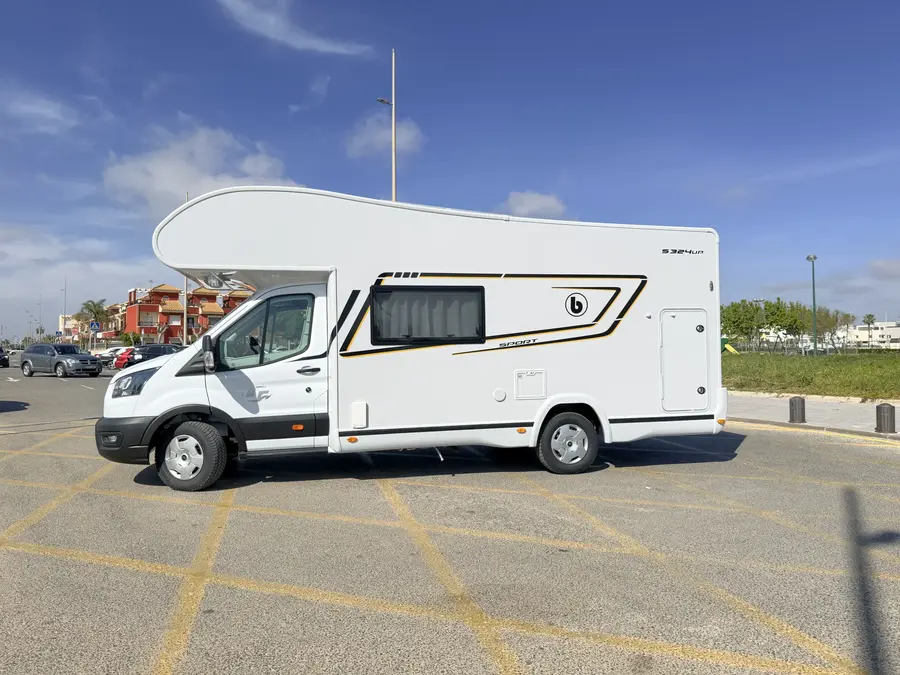
A campervan holiday in Spain can really be an open-ended experience! Travelers can get to know historic cities, quiet countryside stops, coastal drives and mountain landscapes all in one go, rather than by a series of hotel moves and pre-arranged itineraries. For anyone considering taking a camper across Spain, however, preparation matters. Spain is a large country and the roads, topography, climate and experience of travelling differ greatly between the various regions.
A successful motorhome trip is not simply about choosing a destination and getting behind the wheel. There are various factors you have to consider, such as the distance you want to travel every day, where you can legally spend the night, which roads are suitable for your car and how much time you actually have to spend on each road map. The right camper is also important, especially when you’re travelling to camp with youngsters or a big group.
A Spanish road trip can be comfortable, affordable and memorable without the pressure of rush, with a little planning.
Plan a Route That Matches Your Travel Style
One of the first decisions is whether you want to cover a large part of Spain or concentrate on one region.
Both are possible in Spain, due to its geography. The longer trip may link a number of areas, or the shorter holiday could just concentrate on the Costa Blanca, Andalusia, Catalonia, Galicia or northern coast.
It’s easy to get caught up in trying to see everything in one trip and end up taking a driving holiday. Rather, decide on a broad direction and select a couple of locations that are actually of interest to you.
For example, a Mediterranean itinerary might connect Alicante, Valencia, and parts of Catalonia. A southern route could combine Seville, Cádiz, Málaga, and Granada. Travelers interested in mountains and green landscapes might prefer northern Spain.
Allow flexibility between major destinations. A campervan trip is particularly enjoyable when you have time to stop at a small village, viewpoint, beach, market, or nature area that was not included in the original plan.
Take note of the distance between stops—not just the estimated driving time before you leave. Roads on the mountain can be longer than planned, as can city traffic, road works and frequent stops.
It is also important to make a difference between the highways and smaller scenic roads. Highways are generally better for covering distance efficiently, while secondary roads can offer more interesting scenery but may require slower driving.
The best route is not necessarily the one with the most destinations. It is the one that leaves enough time to enjoy them.
Choose Destinations With Different Experiences
A strong campervan itinerary usually combines different types of places.
Spain has major cities filled with architecture, museums, restaurants, and nightlife, but large cities can be challenging for motorhomes. Narrow streets, restricted parking, low-emission zones, and limited maneuvering space can make driving inside historic centers inconvenient.
For cities such as Barcelona, Madrid, or Seville, consider staying outside the center and using public transportation when appropriate.
Then balance city visits with smaller destinations.
Coastal towns can provide opportunities for swimming, walking, and relaxing, while inland villages offer a slower pace and a different view of Spanish culture.
National parks and mountain areas can add hiking and outdoor activities to the itinerary. Rural regions can also be excellent places to experience local food and landscapes away from the busiest tourist routes.
When planning, ask yourself what you want from the holiday. If relaxation is the priority, spending several nights in one area may be better than changing location every day.
If sightseeing is more significant, you may desire shorter stays and a route connecting numerous major attractions.
A campervan offers you flexibility, but that does not mean you have to travel constantly.
Understand Spain’s Roads and Driving Conditions
Driving a motorhome is different from driving an ordinary car.
The additional height, length, and weight affect braking distances, turning circles, parking, and fuel consumption.
Before starting the trip, become familiar with the vehicle’s dimensions. Knowing the exact height is particularly important when approaching underground car parks, covered areas, tunnels, and low bridges.
Major Spanish highways can make long-distance travel relatively straightforward, but smaller roads may be narrow or winding.
Mountain regions require additional attention. Steep gradients, sharp bends, changing weather, and limited passing opportunities can make journeys slower than expected.
Coastal roads can also become busy during peak holiday periods.
Weather should be part of your planning as well. Summer temperatures can be extremely high in parts of Spain, while mountain regions can experience cooler conditions and sudden weather changes.
Keep navigation updated and do not rely entirely on a single GPS application. A route suitable for a car may not always be appropriate for a larger motorhome.
If your vehicle has specific restrictions or dimensions, enter them into navigation systems that support motorhome routing.
Most importantly, avoid rushing. The purpose of a road trip is to enjoy the journey as well as the destination.
Decide How Long to Stay in Each Place
It’s easy to make the mistake of making a plan that might be great on paper but not on your feet.
Each night’s move entails packing, driving to parking or a suitable location for overnight parking, unpacking, and preparing the car for the next departure.
For a week-long trip, choosing two or three main bases may be more enjoyable than trying to visit seven or eight destinations.
If you’re looking to do some visiting in museums, historic districts, restaurants or just local attractions, you might need at least two nights in popular cities.
Smaller coastal or rural destinations can sometimes work well as one-night stops, especially when they form part of a longer journey.
Stay longer if an area has activities that will take a considerable amount of time, such as hiking, beaches, cycling, water sports and several nearby activities to see.
A useful strategy is to build a route with a mixture of travel days and slower days.
After a long driving day, schedule a day where you do very little driving. This gives everyone an opportunity to relax and makes the overall holiday feel less rushed.
Flexibility is one of the biggest advantages of traveling by campervan, so leave room for it.
Pack for the Vehicle, Not Just the Destination
Packing for a motorhome requires a slightly different approach from packing for a hotel.
Space is limited, so avoid taking items that you are unlikely to use.
Clothing should be versatile and appropriate for changing conditions. Even a summer trip can require a light jacket or warmer layer, particularly in northern or mountainous areas.
Useful essentials include comfortable walking shoes, swimwear, sunscreen, reusable water bottles, sunglasses, basic toiletries, and a small first-aid kit.
A flashlight, power bank, charging cables, and basic travel adapters can also be useful.
For longer journeys, consider practical kitchen supplies if they are not already provided with the vehicle.
Food and drinks can be purchased along the way, so there is usually no reason to fill every storage compartment before departure.
Keep important documents, driving licenses, rental information, insurance details, and emergency contacts easily accessible.
It is also sensible to have a small supply of cleaning products, paper towels, rubbish bags, and other everyday items for keeping the vehicle comfortable.
Before packing, check exactly what comes with your rental vehicle. This prevents you from carrying equipment that is already included.
Compare Motorhomes Before Booking
The right vehicle can have a major effect on your holiday experience.
When you compare motorhomes for a Spanish getaway, start with the number of travelers. A couple may be perfectly comfortable in a compact campervan, while a family of four or five will usually need more sleeping and living space.
Vehicle size also affects driving.
A smaller camper can be easier to maneuver through narrow roads and parking areas, while a larger motorhome may provide more comfortable interior space, storage, and bathroom facilities.
Think about how you will actually use the vehicle.
If you expect to spend most of your time outdoors and move frequently, a compact camper may be ideal.
If you plan longer stays or are traveling with children, additional space can make a significant difference.
Look beyond the number of sleeping places. Check the kitchen facilities, refrigerator, bathroom, storage capacity, bed configuration, seating area, and available power options.
Rental conditions also deserve attention.
Check the deposit, mileage allowance, insurance arrangements, driver requirements, pickup and return procedures, and any additional charges.
For travelers flying into Alicante, some rental providers offer airport pickup or vehicle collection near Alicante-Elche Airport, which can simplify the start of a Costa Blanca road trip. One example is Libertad Sobre Ruedas (LSR365), a small campervan and motorhome rental project offering vehicles in several Spanish cities, including Alicante, Barcelona, and Málaga.
The important point is to compare the complete rental arrangement rather than choosing a vehicle based only on its daily price.
Think About Overnight Stops and Everyday Logistics
A campervan offers independence, but there is still a need for consideration about the sleeping quarters.
When you are able to park somewhere, don’t presume you can spend the night there. Current local regulations might be different with regard to overnight stays, so check the current rules and always use authorised campsites or areas when they require it.
Also campsites can make longer trips easier by offering amenities like electricity, water, washing facilities, toilets, etc.
When booking, determine if it will fit your vehicle and if reservations are advised during peak times.
Daily logistics are important, too.
Fresh water, wastewater, rubbish, food, electricity and sometimes laundry will need to be controlled.
Doing these things before they happen means that they will not cause large-scale inconvenience.
Prior to making your way to heavily trafficked destinations, it is beneficial to identify supermarkets, fuel stations, service areas, and suitable parking.
With a little preparation, the practical aspects of camper travel run much more smoothly.
Build Flexibility Into the Journey
A detailed itinerary is useful, but a rigid one can work against the nature of campervan travel.
The weather can be a variable. Strong winds can make for a less fun beach day, and bad weather can be ideal for visiting a museum or historic town.
It may also be that you particularly like a specific location and want to stay there for a longer period.
Whenever possible, avoid booking every night months in advance.
Having some unplanned time allows you to respond naturally to the journey.
This flexibility is especially useful in Spain, as traveling in the opposite direction of that drive can take you from the tourist hot spot to a rural setting.
Meanwhile, popular activities at local attractions could involve advance booking. It’s a matter of balance, of structure and freedom.
Make a schedule of the other important elements, but allow some flexibility for the spontaneous.
Final Thought
A campervan holiday in Spain can propose an outstanding combination of freedom, scenery, culture, and adventure. The key is to think around your actual travel style rather than trying to fit as numerous destinations as possible into one journey.
Think wisely about the route, permit realistic driving times, select destinations that offer diverse experiences, and give yourself sufficient time to enjoy every stop. Preparing for different road conditions and understanding the practical side of overnight travel will make the experience much easier.
Vehicle collection is equally significant. The best camper is not essentially the largest or cheapest option. It is the one that comfortably suits your group, driving tactics, storage needs, and favored style of travel.
With sensible preparation and a willingness to slow down when essential, traveling through Spain by campervan can turn the trip itself into one of the most notable parts of the holiday.

